 Image 1 of 1
Discounted 3 session package
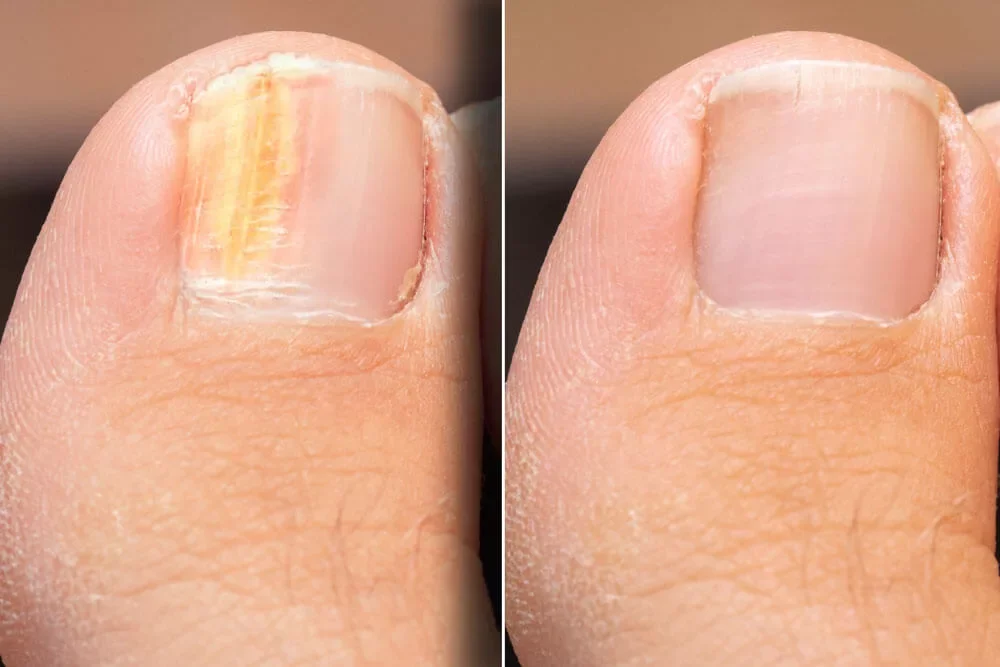
Laser treatment for fungal nail infection (onychomycosis) — how it works, how effective it is, what to expect and what to watch out for — so you can decide whether it is a good option for you
A laser is used to deliver energy that penetrates the nail plate and targets the fungal infection underneath and/or around the nail bed.
The mechanism: the light is absorbed (in many cases by water, fungal pigment or surrounding tissue) and converted into heat (or in cold‐laser/photobiomodulation types, non‐thermal effects) which damages the fungal cells and helps the body clear the infection.
It is typically non‐invasive (no nail removal in many cases), with minimal downtime. Some clinics describe it as “painless” or only mildly uncomfortable (warm sensation) during the treatment
The effectiveness depends a lot on factors like: how severe/thick the infection is; how long it’s been present; how well the nail is prepared; how many treatments; whether follow-up foot hygiene is done. For example, if the nail matrix is heavily infected or the nail is very thick, laser alone may not be enough.
Sessions: multiple sessions are recommended for example 3-6 treatments, spaced 2-4 weeks apart.
Timeline for visible improvement: Because nails grow slowly, you won’t see full “clear” results immediately. It may take several months for the new healthy nail to grow out and replace the infected portion.
Aftercare/hygiene important: Even with laser, if you re‐infect (e.g., via shoes, socks, communal showers) the problem can come back. We emphasise foot hygiene, footwear decontamination, changing socks etc.
Side effects/comfort: Usually minor – perhaps warmth, redness, mild swelling.
If the infection is very advanced (matrix involvement, very thick deformed nail) laser alone may not suffice and you may need additional treatments (oral meds, nail removal) or a combined approach at which you would be advised to seek medical assessment
Results vary; there’s risk of recurrence.
Discounted 3 session package
Laser treatment for fungal nail infection (onychomycosis) — how it works, how effective it is, what to expect and what to watch out for — so you can decide whether it is a good option for you
A laser is used to deliver energy that penetrates the nail plate and targets the fungal infection underneath and/or around the nail bed.
The mechanism: the light is absorbed (in many cases by water, fungal pigment or surrounding tissue) and converted into heat (or in cold‐laser/photobiomodulation types, non‐thermal effects) which damages the fungal cells and helps the body clear the infection.
It is typically non‐invasive (no nail removal in many cases), with minimal downtime. Some clinics describe it as “painless” or only mildly uncomfortable (warm sensation) during the treatment
The effectiveness depends a lot on factors like: how severe/thick the infection is; how long it’s been present; how well the nail is prepared; how many treatments; whether follow-up foot hygiene is done. For example, if the nail matrix is heavily infected or the nail is very thick, laser alone may not be enough.
Sessions: multiple sessions are recommended for example 3-6 treatments, spaced 2-4 weeks apart.
Timeline for visible improvement: Because nails grow slowly, you won’t see full “clear” results immediately. It may take several months for the new healthy nail to grow out and replace the infected portion.
Aftercare/hygiene important: Even with laser, if you re‐infect (e.g., via shoes, socks, communal showers) the problem can come back. We emphasise foot hygiene, footwear decontamination, changing socks etc.
Side effects/comfort: Usually minor – perhaps warmth, redness, mild swelling.
If the infection is very advanced (matrix involvement, very thick deformed nail) laser alone may not suffice and you may need additional treatments (oral meds, nail removal) or a combined approach at which you would be advised to seek medical assessment
Results vary; there’s risk of recurrence.